
When the sales of China's sweeping robot market exceeded 10.60 billion yuan in July 2025, a surge of 40% year-on-year, this once "technology trend" has become the rigid demand standard of millions of families. From random collisions to AI navigation, from single cleaning to global cleaning, the evolutionary history of sweeping robots is the upgrade history of quality life. Today, we decode this golden track of "volume and price rise" in an all-round way from classification, background, industrial chain, trend to brand.
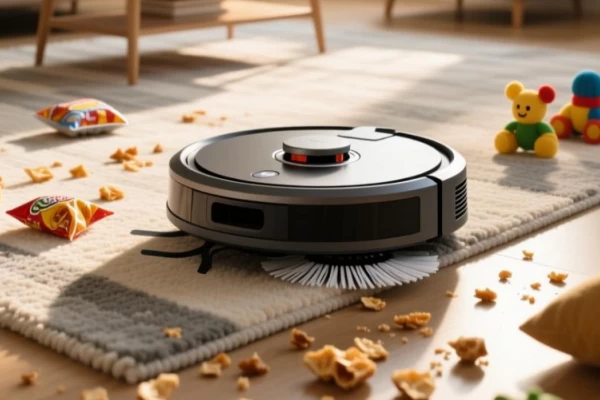
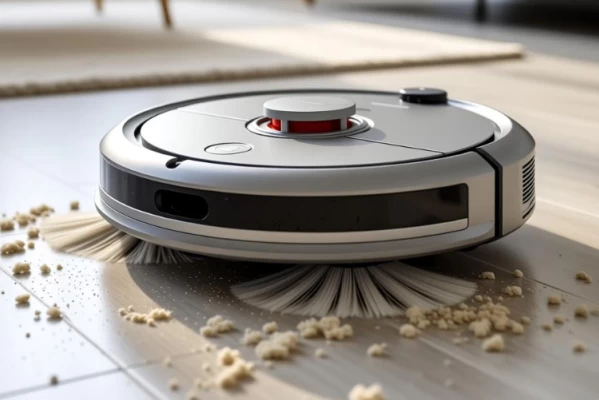
First, accurate matching requirements: four categories of sweeping robots
With the iteration of technology, sweeping robots have formed a clear product matrix, accurately covering the needs of different home scenarios. According to core technology and functional differences, mainstream products can be divided into four categories:
• Random collision type: industry entry-level product, using infrared obstacle avoidance technology, no map planning ability, low cleaning efficiency. Although the price is close to the people, the manual intervention rate exceeds 60%, and the market share has dropped to 9% in 2025, gradually withdrawing from the mainstream market.
• LDS laser navigation type: the backbone of the mid-to-high-end market, equipped with lidar to achieve SLAM mapping. The mapping accuracy of 2cm increases the cleaning coverage rate to more than 90%. In 2025, the market share will remain 32%, the average mapping speed will reach 120 square meters/minute, and the route planning efficiency will increase by 40% compared with the previous generation.
• Visual navigation: The representative category of AI empowered, which realizes environmental perception through the integration of cameras and multi-sensors, and can intelligently identify obstacles such as pet feces and wires. With the advantage of AI visual recognition, the market share will climb to 26.5% in 2025, making it the first choice for pet families and families with children.
• All-round base station all-in-one machine: the industry's high-end flagship category, integrating functions such as automatic washing mop, hot air drying, automatic dust collection, water loading and launching, etc., to realize the whole process of "sweeping-towing-washing-drying" without intervention. In the first half of 2025, the proportion of high-end models supporting advanced functions such as electrolyzed water sterilization and sewage tank reminders has reached 34.7%, making it the first choice for new middle-class upgrades.
Second, demand and technology two-wheel drive: the rise of sweeping robots
The explosive growth of cleaning robots is by no means accidental, but the result of multiple factors such as policy, demand, technology, and channels.
Policy underpinning: After the implementation of the "trade-in" policy in 2024, the shipment of sweeping robots in the fourth quarter increased by 28.2% year-on-year. The introduction of documents such as the "2025 Afterburner Expansion and Implementation of Large-scale Equipment Update Policy" further provides policy support for the development of the industry.
Demand rigidity has exploded: The accelerated pace of modern life has made "freeing your hands" a rigid demand, with the new middle class aged 25-40 accounting for 52% of the core customer base. At the same time, the global population structure of 17.2% of the population aged 65 and above, as well as the rise of the single economy, have jointly generated a huge demand for automatic cleaning.
Technological breakthroughs and cost reductions: In 2016, Stone Technology pushed the cost of LDS modules from $120 to $45, driving Xiaomi's sweeping robot
to detonate the market at 1699 yuan. Today, 70% of base station models are equipped with LDS + visual fusion systems, forming a virtuous circle of technological upgrades and cost optimization.
Comprehensive channel penetration: The rise of live e-commerce has allowed Douyin GMV, a sweeping robot, to increase by 120% year-on-year in 2024. The online grass + offline experience model has greatly improved user decision-making efficiency.
Third, China's intelligent manufacturing advantages: the panorama of the industrial chain of sweeping robots
China has formed the world's most complete sweeping robot industry chain, from core components to end point brands, local enterprises continue to break through, and the localization rate of the whole machine has increased from 52% in 2019 to 78% in 2023.
Upstream: Acceleration of localization of core components
The basic components such as motors and batteries have been independently controllable, and the penetration rate of domestic brushless motors exceeds 75%; Ningde Times and Xinwangda provide high-energy density lithium batteries for leading brands, supporting more than 180 minutes of battery life. In the high-end field, Howei Technology's image sensors and Silan Technology's lidar have achieved import substitution, and the localization rate of main control chips has increased from less than 10% in 2020 to 35% in 2024.
Midstream: Brand concentration continues to increase
Leading companies such as Keworth and Stone Technology occupy more than 70% of the market share by virtue of technical barriers. The Pearl River Delta and the Yangtze River Delta have formed precision manufacturing clusters. Changying Precision, Lixun Precision and other companies provide customized structural parts, which greatly shorten the launch cycle of new products.
Downstream: Online and offline integration
Online channels account for more than 60%, Douyin, Tmall and other platforms drive transformation through scene-based short videos and immersive live broadcasts; offline experience stores focus on high-end model display to meet users' "seeing is believing" needs. At the same time, overseas markets have become new growth points, and Chinese brands dominate the global market.
IV. The future has arrived: three major trends in the development of sweeping robots
The industry is moving from "function stacking" to "experience closed loop", and the future will present three major evolutionary directions:
1. Intelligent dimension upgrade: The deep integration of AI large model and 3D vision makes the sweeping robot have the ability of "deep thinking". Stone Technology connects DeepSeek-R1 to the RRmind GPT large model to realize instant voice interaction, and will also have the ability to actively anticipate cleaning needs in the future.
2. Global functionality: Extending from floor cleaning to three-dimensional space management, the five-axis folding bionic robotic arm can remove obstacles to clean dead corners, and the ultra-thin fuselage can enter low spaces such as the bottom of the sofa and the bottom of the bed. The complete closed loop of "sweeping, mopping, drying + automatic water loading and launching + sterilization" will become standard for high-end models.
3. Ecological collaboration: With the popularity of 5G-A and Wi-Fi 7, sweeping robots will be integrated into the smart home ecosystem, enabling linkage with air conditioners, lighting, and other equipment, becoming one of the home's intelligent control centers.
V. Leading the way: Analysis of the competitive advantage of mainstream brands
The global market has formed a competition landscape dominated by Chinese brands, with major brands seizing market segments by virtue of their differentiated advantages:
• Stone Technology: In the first half of 2025, it ranked first in the world with a 20.7% share. The core advantage lies in technological innovation. The Star Array Pilot 3.0 navigation system realizes 3D mapping. The 100 ° C high-temperature sterilization and 60 ° C hot water-soluble pollution technology of P20 Ultra Plus leads the industry standard. The overseas market channel layout is perfect.
• Keworth: The global market share is firmly second, focusing on the "scenario segmentation" strategy, launching maternal and infant sterilization models for the mother group, and developing an anti-entanglement version of pet hair for pet families. Its YIKO intelligent assistant realizes cross-device voice control, with outstanding ecological integration capabilities.
• Looking for: the king of cost performance, relying on Xiaomi ecological chain resources, the high-end functions will be quickly decentralized. Equipped with self-developed double helix rubber brush and high-speed motor, the cleaning performance is comparable to the flagship model, and the penetration rate is leading in third- and fourth-tier cities and young groups.
• Narwal: Focus on the "ultimate experience", the first automatic mop change technology, the fuselage design is simple and lightweight, and accurately hits the aesthetic needs of female users. Its "zero winding" roller brush design has become the first choice for long-haired users.
|
In 2025, the global market size of sweeping robots will exceed 25 billion US dollars, and the Chinese market is expected to reach 26.80 billion yuan. From random collisions to smart housekeepers, from domestic brands to global champions, every step of the evolution of sweeping robots is reconstructing the value of cleaning scenes. Choosing a sweeping robot that suits family needs is to choose an efficient and worry-free quality life. |